
I do not usually share videos on Substack without context, so let me give you a brief one.
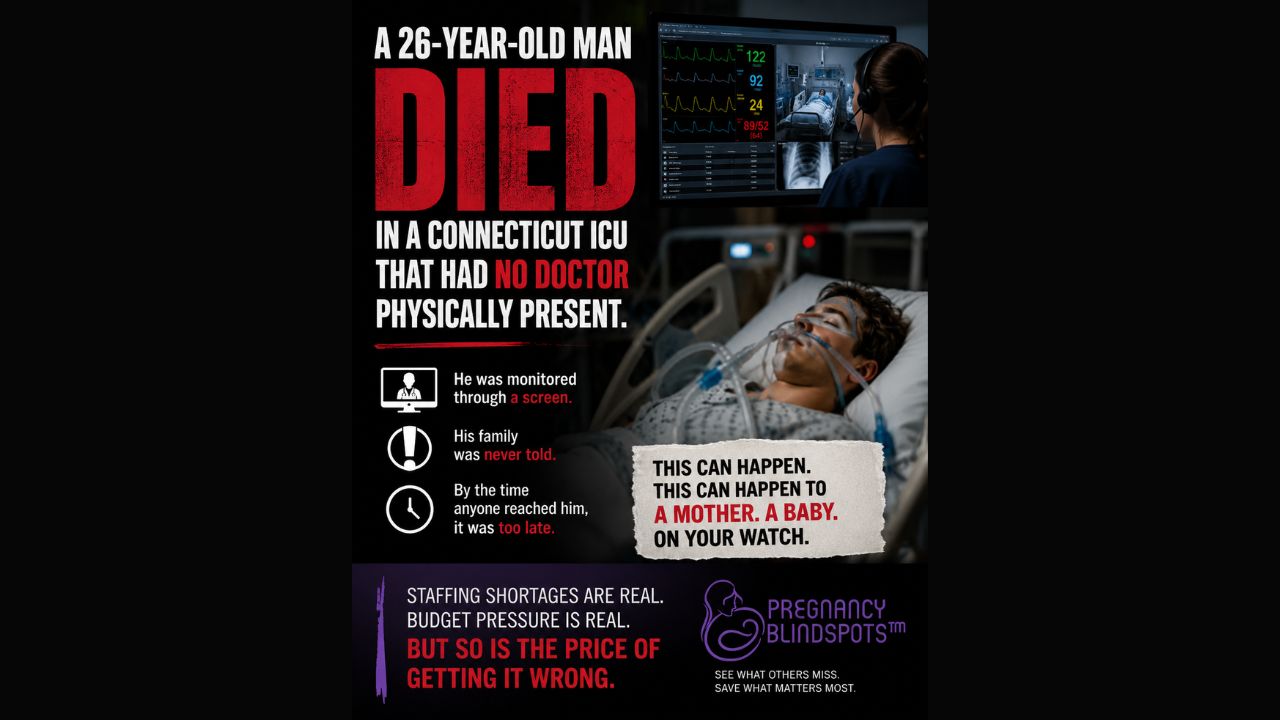
A few days ago, I posted an article here about Conor Hylton, a 26-year-old dental student who died in a Connecticut tele-ICU with no doctor physically present. That article struck a nerve. It has now reached nearly 19,000 impressions on LinkedIn, generated 17 comments from physicians, nurses, NICU medical directors, and hospital executives, and may have received a comment from someone directly connected to Conor’s family.
I instinctively felt the importance of Connor’s story because of the use of a screen to replace a physician using a tele-ICU platform. I have seen these “cost-saving” policies quietly introduced into healthcare before, and they rarely benefit patients.
This video goes deeper.
In it, I share something I have never spoken about publicly on camera: one of the most terrifying nights of my three-plus decades in clinical practice. A pregnant patient. An emergency C-section. A baby who did not survive. And an ICU I was unfamiliar with, and had to manage alone, because no specialist would come for a Medicaid patient.
I share that story because it is the reason a tele-ICU death in Connecticut kept me up at night. And that is why I am telling hospital administrators directly right now: remote monitoring is not a staffing solution. It is a supplement to human presence, not a substitute for it.
If you are a patient, a clinician, or a hospital leader, this video is for you.